Showing posts with label Chitwan National Park. Show all posts

Tuesday, December 8, 2015

About Meghauli Village


Meghauli Village is a small settlement in the Chitwan District of the low Terai region of Nepal, 172 kilometres southwest of Kathmandu. It is also the western gateway for the famous Chitwan National Park, home of a fascinating wildlife that includes royal bengal tigers, one horn rhinos, asian elephants, leopards, gharial crocodiles, more than 600 species of birds and a long etc. The eastern entrance for the Chitwan National Park is located in the touristy town of Sauraha, where the big majority of the visitors base their exploration of the park.


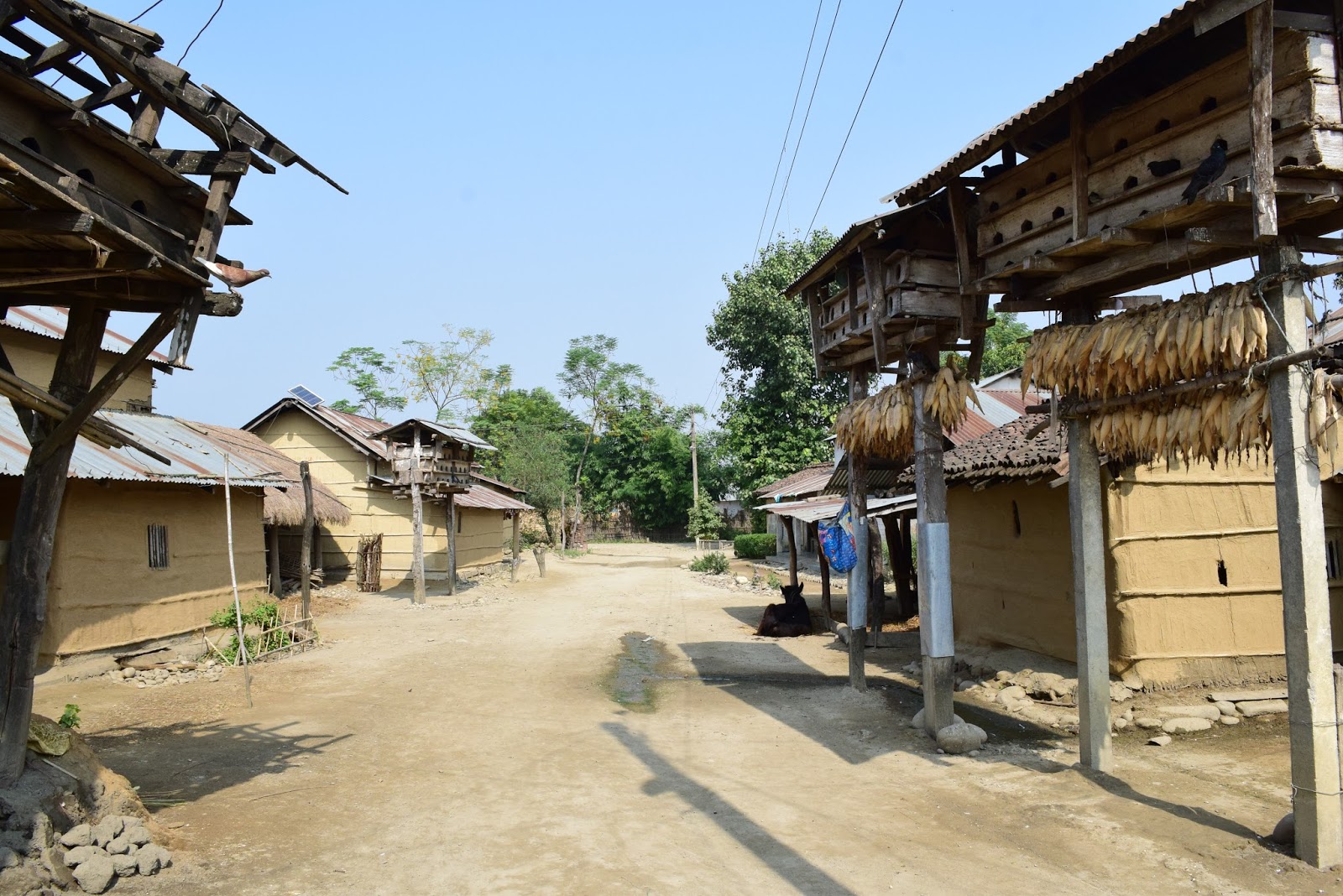
The original inhabitants of the Meghauli area are the Tharus, an ethnic community of the lowlands that lived in isolation for centuries, developing a unique way of living in these wild lands. Today they live alongside the Pahadiya, migrants that came from the mountains to these fertile lands when the malaria was eradicated in the 1950s. Meghauli Village is a well preserve example of an old Tharu settlement, with most of its houses built with natural materials, with stables to keep the buffalos and goats and high wooden pigeon houses.


For decades there were only expensive jungle resorts in the Meghauli area so backpackers and midrange travellers had no more option than going to the touristy town of Sauraha and share their Chitwan adventure with dozens of package tourist. But with the creation of the Tharu Homestay Program in Meghauli Village in 2011 it is possible to have a much more intimate jungle experience, learn about the Tharu culture and live the real rural life of Nepal. Even those with a more limited budget can opt for a walk in the Community Jungle of the village instead of going inside the National Park, where there are still good chances of spotting wildlife (although is less pristine nature). But remember that rhinos, tigers, wild board and other animals of the jungle are very dangerous and people have being attacked here with deadly consequences. Always walk in jungle areas with certified guides and don’t wander around the fields in the night and mornings.


About Chitwan National Park


          Chitwan National Park is a UNESCO World Heritage Site that was designated as a National Park in 1973 (the first in Nepal) to protect its very rich and fragile biodiversity. The word Chitwan is a mix of two Tharu names: Chit (heart) and Van (jungle) that together means “heart of the jungle”. The park is world renown for being one of the last refugees of the one horn rhino and home to other fascinating species like royal Bengal tigers, leopards, Asiatic elephants, wild boars, sloth bears, the endanger gharial crocodiles and more than 600 species of birds. The park compromise 932 square kilometres of tropical and subtropical vegetation, with grassland, riverine and Sal forest. Three rivers shape most of its boundaries: the Narayani and Rapti in the north, and the Rew flowing through the National Park.


During the years of conflict with the maoist guerrilla the military were too busy fighting, and the poachers were left to operate without much control in the Chitwan National Park.  The numbers of rhinos and tigers were severely decimated,  but conservation efforts in the past years had proven efficient and the last count showed 645 one horn rhinos and 198 royal Bengal tigers. This is very good news for the nature and the visitors but it creates more conflict between the animals and the people of the area. Rhinos, tigers, wild elephants and wild boars are very dangerous animals and many villagers have lost their lives and their crops against them. Travellers should take their safety very seriously and always walk in the jungle with certified guides and ask the locals which areas of the village and fields are dangerous to visit.
These are the recommendation of the jungle experts in case you encounter one of these dangerous animals:
Rhino: climb the nearest tree and if you can’t find one run away in zig zag and drop a piece of cloth to distract the animal.
Tiger: look at the animal straight to the eyes and walk backward until you reach safety.


About the Tharu People

Tharu man making a fish trap.

The Tharus are the largest and oldest ethnic group of the Terai Region (in the southern plains of Nepal) and they are the original inhabitants of the Chitwan area. For centuries this lands where infested by malaria -to which the Tharus are genetically resistant- so they remain isolated for years, allowing them to develop their own unique culture, language and traditions. But during the 1950s the Nepalese government eradicate the malaria in the Terai region and thousands of migrants from the mountains came here to claim these fertile lands, changing forever the traditional life of the Tharus. This people are known as Pahadya.

Tharu woman with traditional dress. 


The Tharus are very attached to nature and even now they get much of what they need from the jungle: different types of grass, wood, clay, bamboo, plants and herbs. They use these natural materials to build their thatched houses, elaborate baskets, produce organic fertilizers for the soil and also for medicinal purposes.

Tharu woman from different families work the land
 together during harvesting season.

Tharus are great farmers and they still farm in traditional ways in these very fertile lands. They grow barley, wheat, maize, rice, lentils and vegetables and also raise chickens, goats and ducks. They are very good fishers as well, using large nets and bamboo traps to catch fishes from the nearby rivers. Since the old times the Tharus have lived in groups for protection against enemies and wild animals and to help each other with the farm job. Until today they are still organized in several families to work together the land during the busy times.

Tharu girls painting hands on the mud houses during Diwali Festival.

The Tharu gastronomy is famous among the Nepalese and there are many local tourists that come for holidays to the area just to savour local delicacies like fish and duck curry, sticky rice, spicy river snails and the local roxi (rice based alcohol).


Traditional Tharu dish: river fish curry, sticky rice, rice bread,
vegetable curry, pickle, dhal and pop corn. 

Homestay Experience

    In a country where 80% of the people lives in rural villages, staying at a homestay is a fantastic way to experience the real Nepalese life. It is also a way to promote a sustainable way of tourism, where the benefits of the visitors goes directly into the communities that actually make this place so unique and special.

The 5 Tharu Homestays in Meghauli Village were created in 2011 to encourage village tourism in the area (though little resources were put to promote the destination among foreign travellers). They are spread along a few blocks in the most traditional part of the town and offer simple but clean rooms, delicious homemade food and hours of conversations about jungle anecdotes.


Map of Tharu Homestays in Meghauli Village
When staying at any of the Tharu Homestays you will be living in the owner’s houses with their families, right in the middle of a village where life goes around the goats, the daily house cores and the farm. As is their tradition, guests are treated with great attention and the women of the house will spoil you with delicious homemade food. Most of the rooms are in a separate area of the house and were built specially to receive guests with electricity, fan and mosquito net (some even have attached western toilet).

All the owners are native Tharus of the Chitwan Valley. Some of them had worked previously in the jungle resorts so they speak English and have experience dealing with tourists so they can arrange all the activities you want to do while in the area.


Somlal and Sanu Mahato with their daughter, Tharu Homestay #1
Jeeban and Debi Mahato, Tharu Homestay #2


Thaghani and Rusma Mahato, Tharu Homestay #3
Buddhinram and Ratna Mahato, Tharu Homestay #4
Asaram and Sony Mahato, Tharu Homestay #5


Things to do in Meghauli Village

JUNGLE ACTIVITIES

·       Jungle walk: the jungle inside the Chitwan National Park and the Community Jungle of Meghauli Village is a very rich ecosystem and a walk here gives you the chance to see deers, monkeys, wild boars, wild elephants, one horne rhino and many species of birds. Walking with a certified guide is mandatory as these animals can be very dangerous. Tharu guides also know about traditional indigenous medicine and can also explain the use of the different grass that the Tharu people collect from the jungle to build their houses, feed the animals, make baskets and produce utensils. In the Community Jungle there is a watching tower where you can spend the night for a small fee.

·       Elefant Safari: the safest way to see wildlife in the jungle is on top of one of the magnificent Asian Elephants. These huge animals make little noise when they move and from their backs you can see great distances and spot animals that sometimes hide behind the tall grass. You can take an Elephant Safaris inside the Chitwan National Park or in the Community Forest of Meghaulli Village.


·       Elephant bath: you can go on top on an elephant inside the Rapti River and help to bathe this beautiful animal.

·       Jeep safari:  going by jeep in the jungle will allow you to get deep inside the park. But keep in mind that the noise of the motors usually scares away the animals, reducing your chances of spotting wildlife.

·       Crocodile breading centre: any jungle activity inside the park can include a visit to the crocodile breading centre where is possible to come in close contact with the two type of crocodiles that lives in the area, the magger and the endanger gharial or fish eater.


·       Swimming in the Rapti river: any jungle program can end with a swim in the Rapti river, after the guides had checked that there are no crocodiles in the area. In some places is necessary to cross by canoe. 

VILLAGE & CULTURAL ACTIVITIES

·       Tharu cultural museum: this interesting museum was created in 2010 to preserve the cultural heritage of the traditional Tharu communities. It contains a small collection of objects used for fishing, farming and other daily chores and graphic representations of how the life was in the old times. Is a much more interesting experience with a Tharu guide.

·       Tharu Cultural Dance: a group of 37 villagers had created a beautiful and very interesting Tharu Cultural Dance show where they wear traditional dresses and perform 5 different styles of dances: Damphu (drums), Clapping, Holy, Ghumara and Stick dance. It last for about 1 hour and is held on request at the main square of Meghauli Village.


·       Village walk: Meghauli Village is a very well preserve example of a traditional Tharu settlement. Most of the houses are built in the traditional style, with mud, grass and cow dung, with little hands painted on the walls. Most of them also have stables where they keep the buffalos and goats, while the chickens and ducks wonder freely around the people. In some places you can find very picturesque pigeon houses, used by the Tharus to attract these birds to use them as offerings to the gods. Walking a little bit outside the village you can see the colourfully dress women working in the fields together.


·       Walk to Patihani Village: Just 15 minutes walk from Meghauli Village is the small Patihani Village which is another very well preserved traditional Tharu settlement. Is at the doorstep of the Sarang  Wildlife Sanctuary.  

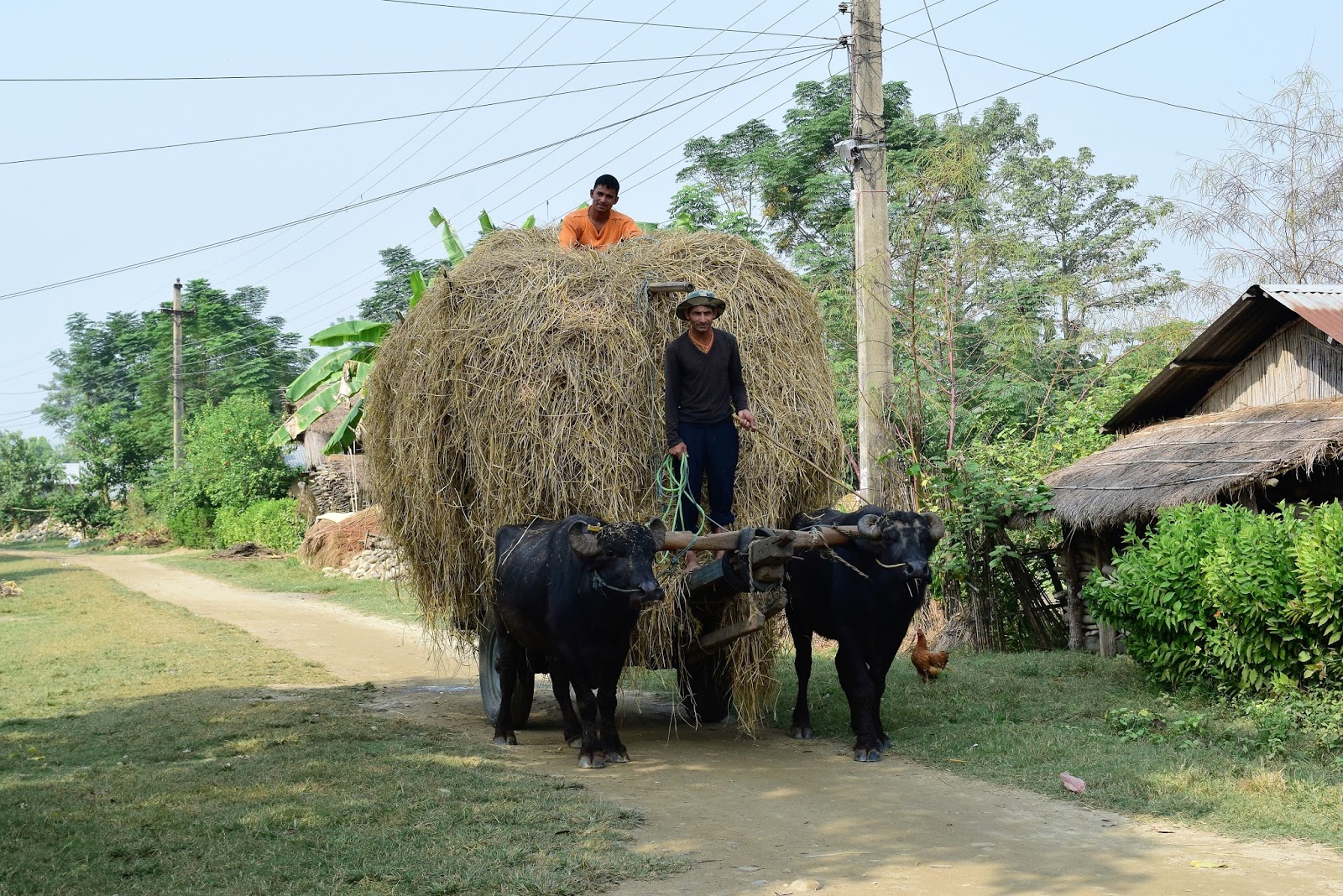
·       Buffalo cart ride:  buffalo carts are an essential part of the life in Meghauli Village. They are used to carry everything possible and also to work the land. A tour on a buffalo cart along the villages and farmland is a very authentic and picturesque experience.


·       Horse riding: it is possible to take a horse ride around the area. The stable is located in Telauli Village and most of the tours go to the Golanghat area.


·       Bicycle tour: you can hire a bicycle and ride around the villages and fields or make the bumpy 45 minutes ride to the amazing sunset view point in Golanghat, at the confluence of the Narayani and Rapti Rivers. You can go there by yourself but is easy to get lost in the dark roads at night. Better ask a local to take you or make your way back right after the sunset and bring a torch.

·       Canoe riding to sunset point: a less painful option than riding a bicycle to Golanghat is to go down the Rapti River on a traditional Tharu style canoe while you have the opportunity to observe a wide variety of birds, wild deers and the endanger gharial crocodiles. Sometimes is even possible to spot one horn rhinos going down to the river to drink water.


About this site

This guide was created to provide general information about Meghauli Village for independent travellers. While touring Nepal we heard about this place from people who got there by accident so we look for information in internet to go there and we only found data from the expensive jungle resorts but very little about the logistic to travel independently there. So we took our chances and went to Meghauli Village without knowing if we would find cheap accommodation and reliable services to go on a jungle adventure in the Chitwan National Park. And what we found there was a very well organized destination, with elephants ready for safaris, certified jungle guides, an interesting cultural program and the cheap and comfortable Tharu Homestays with delicious homemade food. We also found a very welcoming community, a colourful village life and a perfect place to slow down the pace… but with little resources to promote the place, there were no tourist to give life to this amazing destination.


        At the time of writing there were more than 150 hotels and guest houses in Sauraha -the most popular entrance of the Chitwan National Park- while Meghauli Village had only 5 Tharu Homestays and 2 guest houses that are empty most of the year. Here there are no bars, wifi cafes, souvenir shops or ATMs, just a handful of local restaurants that don’t even have an English sign. But is not going to be long before Meghauli Village enters the tourist radar, so if you are those travellers who like to “discover” a destination way before the masses, you should come here now.


        We created this site because we believe that sustainable tourism can have a very positive impact for many people in Meghauli Village and they are very willing to see more visitors. But irresponsible travellers can do a lot of harm in the fragile nature and the culture of the area. So please only share this information only with travellers committed with sustainable travel practices. And if you have any comments please write to us to meghaulifit@gmail.com 


How to get there


       It is fairly easy to get to Meghauli Village from anywhere in Nepal. The main transportation hub for the Chitwan area is the city of Narayangarh in Bharatpur. From here you can go to the east to Sauraha or to the west to Meghauli Village.

         There are direct buses to and from Kathmandu to Meghauli Village departing from the Kalanki Bus Park every day in the early morning. You can get there by taxi or walking 20 minutes from Thamel to Balaju Chowk and then taking a local bus to Kalanki. Some agencies in Thamel can help to buy the tickets in advance. On the way back buses depart from the main bus stand of the village.


           If coming from Pokhara or other destinations in Nepal you can take a local bus to Narayangarh or take the tourist bus to Chitwan (that will go to Sauraha) and get off at Narayangarh. From here you can easily take a local bus to Meghauli Village at any time during the day and it takes about 1.5 hours to make the 25 kilometers journey. The bus stops at the entrance of the village where there is a map of the Tharu Homestays.

         The closest airport is in the city of Bharatpur that operates flights from Kathmandu and Pokhara. There is one airport at Meghauli Village that used to serve the luxury resorts but there are no flights operating at the moment.

When to visit

It is possible to visit Meghauli Village and Chitwan National Park the whole year, each season offering a different experience.

January / February: after the Tharu people are allow in the park to cut the grass in December the conditions for wildlife watching are excellent. This is winter time and it gets very cold in the night and mornings, so warm clothes are necessary. During this time the villagers are busy planting wheat, buckwheat and lentils which can be a nice spectacle to watch.


March/April/May: during this time the conditions to see wildlife are at its best as the new grass growing in the park attracts not only its native animals and birds but also many migratory ones. This is also the hottest time of the year and the high humidity can be uncomfortable so is a good idea to plan the sightseeing for the cool mornings and evenings and rest during the hot hours.

June/July/August/September: this is monsoon season so travellers should be prepared for heavy rain, muddy roads, flooded rivers and plenty of leaches in the jungle. This is not the best time for jungle walking so an elephant safari is a better option. The village life can be very interesting to see during this months as this is the rice planting season and everyone is busy in the fields.


 October/ November/ December: during these months the grass in the jungle is very tall and dry, making more difficult to see the wildlife, but not impossible. An Elephant Safari is a good option as is easier to spot animals from high. This is the beginning of winter so nights and mornings are a bit cold and foggy but the temperature during the day is very pleasant. October and November are very colourful months as it is time for festivals and weddings. Is also rice harvesting season and you can see whole families working from dusk to dawn to get the rice they will eat the whole year.


What to bring
· Light, neutral colour clothing. Long trousers and long sleeved shirts to protect you from mosquitoes and scratches while walking in the tall grass.
· A hut, plenty of sunscreen and mosquito repellent
· Warm clothes for cold nights and mornings in the winter.
· Binoculars are great to have a closest view of the animals and birds.

Services

November 2015


Accomodation

Budget: at the time of writing there were 5 Tharu Homestays and two budget guest houses in Meghauli Village.

¨ Tharu Homestay #1: Somlal Mahato & Sanu Mahato
                                          3 rooms. +977 9845672961
¨ Tharu Homestay #2: Jeeban Mahato & Devi Mahato
                                          9 rooms. +977 9845180941
¨ Tharu Homestay #3: Thaghani Mahato & Rusma Mahato
                                          2 rooms. +977 9845160886
¨ Tharu Homestay #4: Buddhinram Mahato & Ratna Mahato
                                          2 rooms. +977 9845837251
¨ Tharu Homestay #5: Asharam Mahato & Sony Mahato
                                          2 rooms. +977 9845145808.
¨ Rhino Horn Lodge and Restaurant: around the corner from Homestay #1, beside the ex Meghauli Airport. 
¨ Jungle View Restaurant and Lodge: on the ex Meghauli airport road, in direction to the Sarang  Wildlife Sanctuary Lodge.

Midrange to High-end:  there are 8 jungle resorts in the Meghauli Village offering from midrange to luxury accommodation. They are easily found on internet.

Restaurants

All Tharu Homestays are ready to provide all meals for their guest (basic breakfast, dhal bat and typical Tharu food on request). For more alternatives, there are a few restaurants in Meghauli, Telauli and Golaghat villages. Most of their signs are in Nepalese but they are easy to recognize as they have photos of dishes or the animals they cook and some of them have English menus. Some of the specialities of the area are duck or buffalo meat with beaten rice, peas and chutney and river fish served in a spicy curry.


Money

There are no ATMs or money changers in Meghauli Village. The closest one in in Narayangarh, 1.5 hours by bus.


 Shops

Meghauli Village have a few small shops where you can find simple items like shampoo, toilet paper and cookies. Telauli Village has also pharmacy, clothes and tailors.
Going ahead from the Friendship Clinic in Telauli Village there is a small sculpture workshop called Bishwokarma where Tara makes wooden sculptures of rhinos, tigers and elephants.


Travel agencies

At the time of writing there were no travel agencies in Meghauli Village but most homestay owners can arrange all type of activities for their guest. Most of them have years of experience as tourist guides and they have all the necessary contacts to organize elephant/jeep safaris, horse riding, canoe trips, cultural dance, buffalo cart tours, etc.

Bicycle rental

Most homestays can arrange bicycles for their guest.

Laundry service

All accommodation can provide laundry service for their guest.

Internet

At the time of writing there weren’t internet cafes or wifi available for tourist.

Medical facilities
There are limited medical facilities in the Meghauli Village area where simple ailments can be treated. For more complex situation, the closest big hospital is in Bharatpur, about 1.5 hours by bus from Meghauli Village. There are pharmacies with limited stock in the neighbouring Telauli Village. It is a good idea to carry a First Aid Kit and extra supplies of specific medications.